AIoptimized

Dental practices · United Kingdom

SEO for Dentists and Dental Practices in the UK

Patients still search “dentist near me”. They also ask ChatGPT which practice is best for Invisalign, implants or a nervous first visit. If your site cannot answer those questions clearly, the booking goes elsewhere — often to a corporate with a thinner clinical story than yours.

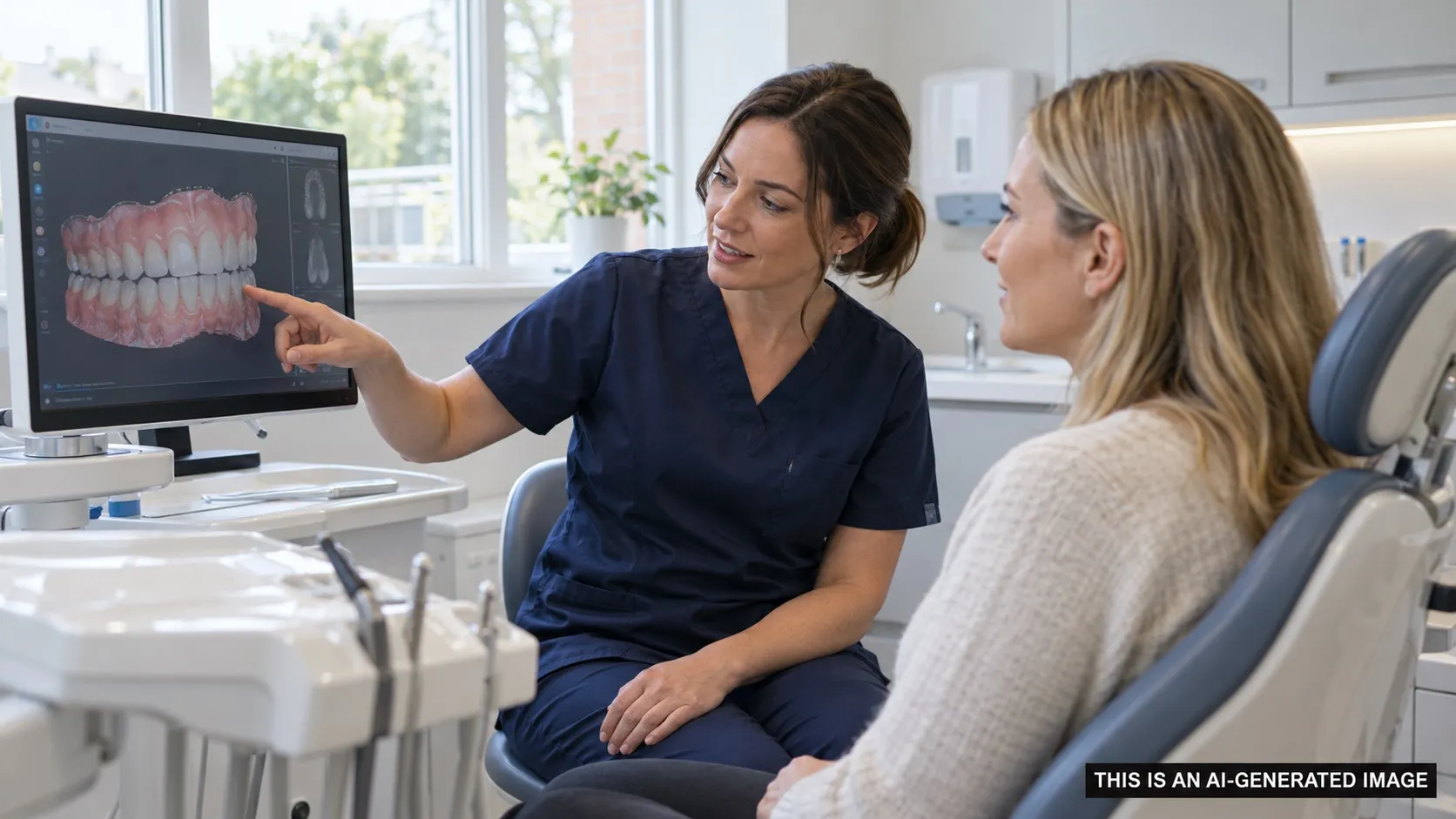
A dentist explaining a digital dental scan to a patient in a consultation room.
AI-generated image for illustration. It does not depict a client of AIoptimized.

The practice is better than the search results suggest

Most dental websites were built to look pleasant, not to be chosen. Thin treatment pages, a buried fee guide, and a Google Business Profile that has not been touched since the last CQC inspection. Meanwhile national brands and marketplaces occupy the answers patients see first.

  1. 01Your Invisalign and implant pages are three paragraphs copied from a supplier, so they rank for nothing useful and persuade nobody.
  2. 02Reviews live on Facebook; Google still shows a handful of old ones and an incomplete service list.
  3. 03AI answers cite a comparison site or a London chain, not the clinician who actually treats people on your high street.
  4. 04The site loads slowly on a phone in the car park — which is, inconveniently, where a lot of “emergency dentist” searches happen.

What dental SEO actually looks like here

Local search that matches how people choose a dentist

Maps, NAP consistency, service categories, and location pages that do not pretend you have six imaginary branches. We tidy the profile patients already trust before we write another blog nobody asked for.

Treatment pages with clinical gravity

Implants, Invisalign, composite bonding, hygiene, emergency — written so a nervous adult understands the journey, the likely cost band, and why your practice is the right room to sit in. Schema, FAQs and internal links included.

Visibility in AI answers, not just ten blue links

Clear entities (practice, clinicians, treatments, towns), crawlable answers, and pages that large language models can quote without inventing your fees. This is structured content and technical hygiene — not a secret prompt pack.

A path from search to the diary

Enquiry forms that do not feel like a call-centre script, click-to-call on mobile, and landing pages that respect GDC advertising rules. Rankings that do not turn into bookings are just expensive vanity.

Start with an audit if you already have a site you are not ready to replace. If the current build cannot carry the work, we will say so — and quote a rebuild in the £2–5k band, not a theatre production.

Google Business Profile and Maps, in practice

Patients often see the practice on Google Maps before they see the website. The Google Business Profile is the card they judge: category, name, address, phone, photos, and how you reply to reviews. Keep it true to this practice. A tidy profile is not a promise of a place in the local pack.

  1. 01Categories

    Set the primary category to the closest true description of a dental practice. Add a secondary category only when you genuinely provide that work, such as orthodontics or implants. Do not tick every dental label in the list. In the services field, name the treatments you want enquiries for, in the same words you use on the website.

  2. 02Name, address and phone

    The practice name, street address and phone number on the profile should match the website and the directories you already appear on. Do not add words such as best or cheap, or a treatment name, to the business name. Put the map pin on the entrance patients use. If you have two surgeries, each real address needs its own profile. Do not open a listing for a town where you have no surgery.

  3. 03Photos

    Use the exterior, the reception, and the rooms patients actually sit in. Update them when the practice changes. Patient images need proper consent. A stock smile from a photo library is not a case of yours, and it should not appear as one.

  4. 04Review replies

    Reply in your own words, including to complaints, rather than leaving them for a quiet month. Thank people for something specific. If a review raises a clinical concern, keep the public reply short, leave the detail off the profile, and offer a direct way to continue. Do not offer money, discounts or treatment in exchange for a review, and do not post reviews as if you were a patient.

Which pages a practice site should hold

People search with a treatment and a place in mind. The site should answer both. Use this as a blueprint, and drop a row you do not offer. A page that only swaps the town name is not a location strategy.

Scroll the table sideways to read each row.

Pages to plan, with a thin version and a useful version of each
PageWhat it is forThin versionUseful version
Practice homeWho you are, where you are, and how to book.A carousel and a welcome paragraph that could belong to any practice.The towns you serve, whether you are NHS, private or mixed, the clinicians, and a phone number that works on a mobile.
One page per treatment you provideImplants, aligner treatment, bonding, hygiene, emergency, and the other work you actually do.Three paragraphs copied from a supplier, with no sense of this practice.Who it suits, the usual journey, how you explain fees, which clinician, and the questions patients ask before they call.
ClinicianThe person a patient searches for by name.A headshot and a hobby.The treatments they provide, and the registration details you are willing to publish.
Fees, or how you chargeA fair expectation before the phone call.A line that says contact us for prices, and nothing else.Fee bands you can stand behind, or a plain account of what a consultation includes. No invented discounts.
New patientsWhat the first visit involves.A long form and no explanation.What to bring, how NHS and private visits differ if you are mixed, support for nervous patients, and step-free access if that is true.
This surgeryThe real address.A doorway page for every nearby village, with the town name swapped.Address, parking, hours, and the treatments this surgery provides.

If you want to be found for a treatment in the town where the surgery sits, say so on the treatment page and on the surgery page. A separate URL for every village is the thin version of the same idea. We will not publish those.

What we will not write

Dental advertising sits under GDC guidance. We treat that as a limit on the copy, including text that an AI answer might quote. We will not soften a claim so that it ranks.

We will not

  • Invent success rates, painless guarantees, or a claim to be the best dentist in a town.
  • Use a stock smile as if it were a patient of the practice.
  • Publish a clinical claim that is still waiting for a clinician to sign it off.
  • Hide whether a treatment is NHS, private, or a mix of the two.
  • Promise a position on Google, in Maps, or in an AI answer.
  • Add a treatment page or a town page for work you do not do at that practice.

If a sentence needs a clinician to stand behind it, it waits. That is the same line as the questions further down the page.

Questions we actually get asked

Do dentists still need SEO if everyone uses Instagram?

Instagram is useful for social proof. It is a poor place to explain implants, fees or sedation, and it is almost invisible to Google and to AI assistants. Patients still search, then lurk on your site, then book. SEO is the bit that gets them to the lurk.

Will you write clinical claims we cannot stand behind?

No. Copy is written to GDC advertising guidance: no invented success rates, no “best dentist in Britain”, no stock smiles pretending to be your patients. If a claim needs a clinician’s sign-off, it waits for one.

How long before we see movement?

Local pack and profile work can move in weeks if the foundations are weak. Competitive treatment terms in a dense city take longer. An audit will say which is which, rather than promising page one for “Invisalign London” by Friday.

Do you work with NHS, mixed and fully private practices?

Yes. The mix changes the offer — NHS pages should not pretend every treatment is private — but the search problems are related: clarity, locality, and a site that can be cited.

Next step

Book an audit. We will say if the site can carry the work.

Audits from about £700. Websites about £2–3k. Retainers from about £750/month. If a rebuild is the better path, we will say so before anyone is out of pocket.